
Nepal Trekking Permit Guide (2026)

Nepal is home to some of the world’s most spectacular trekking destinations, from the iconic Everest Base Camp Trek to the breathtaking Annapurna Circuit and the remote Manaslu Region. Before setting out on any trekking adventure, understanding Nepal’s trekking permit system is essential.
Every year, thousands of trekkers visit Nepal to explore its Himalayan landscapes, rich cultural heritage, and diverse trekking routes. Most trekking regions require one or more permits issued by the Government of Nepal or local conservation authorities. These permits help protect natural environments, support local communities, improve visitor safety, and preserve Nepal’s unique mountain ecosystems.
This Nepal Trekking Permit Guide explains everything you need to know about trekking permits in Nepal, including the different permit types, trekking regions, permit costs, where to obtain permits, required documents, and useful tips for a hassle-free trekking experience.
What Is a Trekking Permit?
A trekking permit is an official document that authorizes visitors to enter designated trekking regions in Nepal. Depending on the destination, you may need one permit or several different permits.
Permit requirements vary because some trekking routes pass through national parks, conservation areas, or restricted regions that require additional authorization.
Carrying valid permits throughout your trek is mandatory. Authorities regularly inspect permits at checkpoints along popular trekking routes.
Why Are Trekking Permits Required?
Trekking permits are not simply administrative documents. They play an important role in protecting Nepal’s mountains and ensuring a sustainable tourism industry.
Permit fees contribute to conservation projects, trail maintenance, wildlife protection, waste management, and community development. They also help authorities monitor visitor numbers and improve emergency response during search and rescue operations.
Having valid permits also helps local governments manage tourism responsibly while preserving the natural beauty that attracts visitors from around the world.
Types of Trekking Permits in Nepal
Depending on your trekking destination, you may need one or more of the following permits.
TIMS Card (Trekkers’ Information Management System)

The TIMS Card helps maintain a database of trekkers traveling throughout Nepal. It supports trekker safety by assisting authorities in locating travelers during emergencies and maintaining visitor records.
Some trekking regions require a TIMS Card, while others have replaced it with local permit systems. Always verify the latest requirements before your trip.
National Park Entry Permit
Many famous trekking routes pass through Nepal’s national parks.
Popular national parks requiring entry permits include:
- Sagarmatha National Park
- Langtang National Park
- Rara National Park
- Shey Phoksundo National Park
- Makalu Barun National Park
These permits support environmental conservation and park management.
Conservation Area Permit

Several of Nepal’s most popular trekking destinations are located inside conservation areas.
Common conservation permits include:
- Annapurna Conservation Area Permit (ACAP)
- Manaslu Conservation Area Permit (MCAP)
- Kanchenjunga Conservation Area Permit (KCAP)
- Gaurishankar Conservation Area Permit (GCAP)
Permit fees contribute directly to conservation initiatives and local community projects.
Restricted Area Permit (RAP)
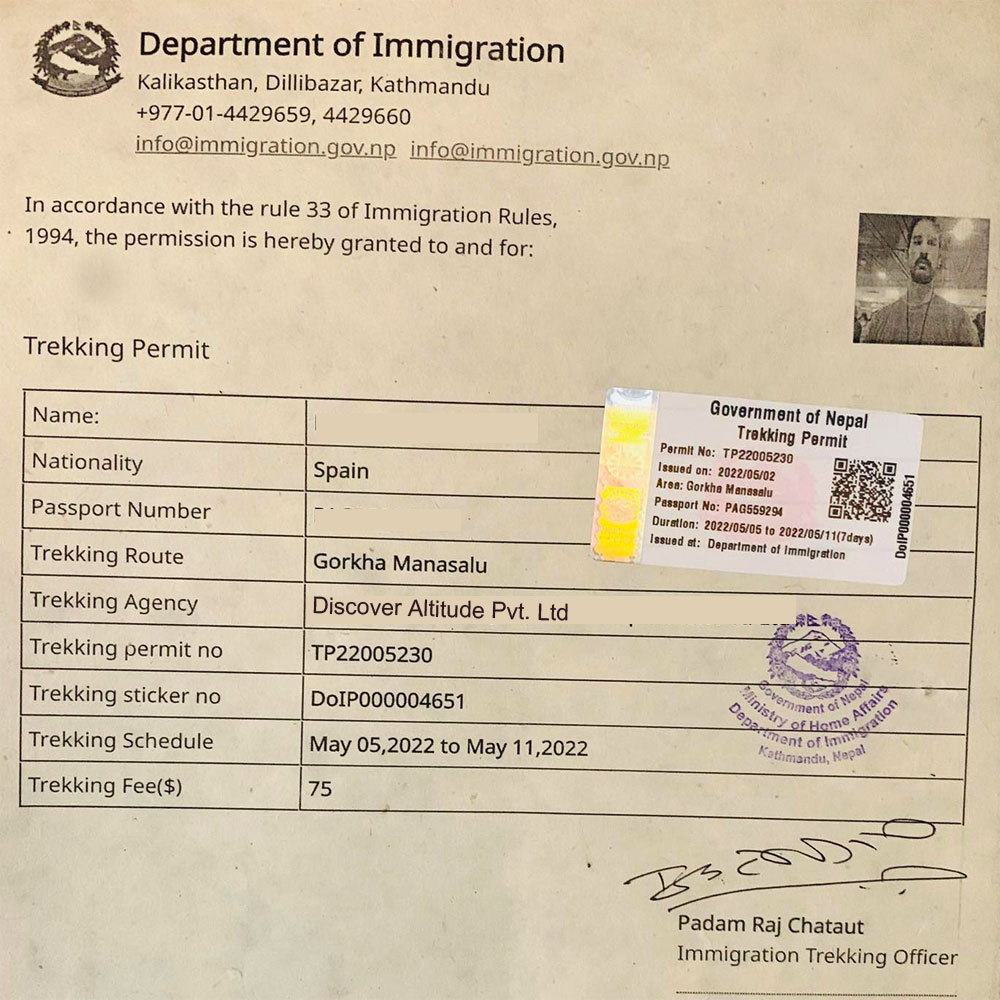
Certain remote regions near Nepal’s international borders require a Restricted Area Permit.
These areas include:
- Upper Mustang
- Upper Dolpo
- Manaslu Restricted Area
- Nar Phu Valley
- Tsum Valley
- Kanchenjunga Restricted Areas
Restricted Area Permits are issued only through registered trekking agencies, and independent trekking is generally not permitted in these regions.
Trekking Permits Required by Region
Everest Region
Most trekkers require:
- Khumbu Pasang Lhamu Rural Municipality Permit
- Sagarmatha National Park Entry Permit
Some itineraries may have additional requirements depending on the route.
Annapurna Region
Trekkers generally require:
- Annapurna Conservation Area Permit (ACAP)
Depending on the route and current regulations, additional local permits may also apply.
Langtang Region
Required permit:
- Langtang National Park Entry Permit
Manaslu Circuit Trek
Required permits usually include:
- Restricted Area Permit
- Manaslu Conservation Area Permit
- Annapurna Conservation Area Permit
The Manaslu Circuit must normally be trekked with a licensed guide through a registered trekking agency.
Upper Mustang Trek
Required permits include:
- Restricted Area Permit
- Annapurna Conservation Area Permit
Upper Mustang has special permit regulations because of its cultural and geographical significance.
Kanchenjunga Region
Trekkers generally require:
- Kanchenjunga Conservation Area Permit
- Restricted Area Permit (where applicable)
A licensed guide may be mandatory depending on the itinerary.
Where Can You Obtain Trekking Permits?
 Most trekking permits can be obtained in Kathmandu before your trek begins.
Permits are commonly issued through:
- Nepal Tourism Board offices
- Department of National Parks and Wildlife Conservation
- Registered trekking agencies
- Local permit checkpoints for specific regions
For restricted area permits, travelers must apply through an authorized trekking agency.
Documents Required
When applying for trekking permits, you will normally need:
- Original passport
- Valid Nepal tourist visa
- Passport-sized photographs (if required)
- Travel itinerary
- Emergency contact details
- Trekking agency information (for restricted areas)
Providing accurate information helps ensure a smooth application process.
Trekking Permit Costs
Permit fees vary depending on:
- Trekking region
- Nationality
- Duration of the trek
- Restricted area regulations
- Conservation area requirements
Because permit fees are occasionally revised, travelers should confirm the latest rates before traveling.
Can You Trek Without a Permit?

No.
Entering protected trekking regions without valid permits is illegal. Authorities conduct regular permit inspections along trekking routes.
Travelers without proper permits may be denied entry, fined, or required to return to the nearest checkpoint.
Tips Before Applying for Trekking Permits
Planning ahead makes the permit process simple and stress-free.
Before your trek:
- Confirm the latest permit requirements.
- Carry printed copies of your permits.
- Keep your passport with you during permit collection.
- Purchase permits before leaving Kathmandu whenever possible.
- Trek with a licensed guide in regions where guides are mandatory.
- Respect local rules and conservation regulations.
Frequently Asked Questions
Do all trekking routes require permits?
Most popular trekking regions require at least one permit.Each trekking destination follows its own permit regulations, so the documents required may differ.
Can I buy trekking permits at the airport?
No. Trekking permits are generally issued by the Nepal Tourism Board, relevant government offices, or registered trekking agencies.
Are trekking permits refundable?
Permit fees are generally non-refundable after issuance.
Do children need trekking permits?
Permit requirements for children vary depending on the trekking region and applicable regulations.
Can I arrange permits through a trekking agency?
Yes. Most international visitors choose to arrange trekking permits through a registered trekking company, making the application process simple and convenient.
Why Trek With a Registered Trekking Company?
While some trekking routes allow independent travel, organizing your permits through an experienced trekking company offers several advantages.
Professional trekking agencies handle permit applications, provide licensed guides and porters, monitor weather conditions, assist with logistics, and offer support in emergencies. This allows trekkers to focus on enjoying Nepal’s spectacular mountain landscapes with greater confidence and convenience.
Final Thoughts
Obtaining the correct trekking permits is one of the most important steps when planning a trekking adventure in Nepal. Whether you are trekking to Everest Base Camp, Annapurna Base Camp, Langtang Valley, Manaslu Circuit, Upper Mustang, or another Himalayan destination, carrying valid permits ensures compliance with local regulations while supporting conservation and sustainable tourism.
Planning your permits in advance, understanding regional requirements, and trekking responsibly will help you enjoy a safe and memorable journey through the Himalayas.
For the latest permit information and professional assistance, consider arranging your trek through a trusted Nepal trekking agency that can manage permits, logistics, and local support from start to finish.